Pages

Showing posts with label engineering education. Show all posts

Tuesday, May 11, 2010

Space, Inspiration, and STEM Education


Food for thought as I attend the “Igniting Young Minds Through Space” symposium this week...I’m a big advocate of getting kids interested in space exploration as soon as possible. My sister informed me awhile back that my six-year-old niece had built a rocket out of Legos. Warms the heart.


But I think some thought needs to be given to the whole notion that being interested in space as a kid automatically means you’re going to study science, technology, engineering, or math (STEM) subjects. Perhaps I’m an anomaly (big surprise), but as I was taking aptitude tests as a kid, I always scored high on math and science—higher than I did on English, by the way—and yet I ended up as an English major and didn’t get into technical writing until well into my second career at age 33. How did that happen? I was smart enough. My mother was taking an algebra course when I was in sixth grade, and I was doing the problems out of her book for fun. However, around junior high I started having trouble with algebra, and despite being in semi-advanced placement classes, I was really struggling to get by. Part of this might have been a hangover from my social struggles. But part of it was just boredom. I didn’t enjoy doing math for fun anymore. I took environmental science and biology to avoid the math that I knew came with physics and chemistry, and no one pushed me to do otherwise.


All this time, I was following the space program, particularly the Shuttle, which was just starting to fly when I was in junior high (my dad took me to STS-2, the second launch of Columbia, in 1981). But I remained a science fiction geek, very much stuck in my own little world(s). Part of the blame I place solely on myself—I was not incapable, I was lazy. It’s not that I couldn’t do the math, I just didn’t want to. I was bored, and SF seemed more fun/interesting. I graduated Northern Illinois University (19 years ago today, as it happens) with a minimum of dummy-algebra, dummy-trig, and that was it. I was done with that stuff. I majored in English literature, minored in history, and took science classes that didn’t require a great deal of math (meteorology, geology). I was going to write The Great American Science Fiction Novel. I still recall Father Dan asking, “Now that you’ve got no marketable skills, what are you going to do with yourself?” In fact, I had this irrational belief that I could write the aforementioned Novel and make enough money to go to Disney World whenever I pleased. Meanwhile, back in the real world, I ended up working at Disney World for 12 years to pay the bills and support my SF writing habit. Never have written that Novel, by the way.

  Again, despite my interest in space and SF, my career path did not lead directly to a career in the space business. What happened was that I went to a space advocacy convention (the International Space Development Conference) in Orlando when it came to town that year and “got religion,” or at least figured out what I wanted to do with my life: write for the space business. You can thank Robert Zubrin for that. He was a dynamic speaker, at the height of his influence at the time, and talking very boldly about a humans-to-Mars program that could be done within 8 years. I thought, what the heck, I can contribute to that! And so I went back to school to get a B.S. in engineering, figuring that I’d need some technical credential(s) to write for the space business. I willingly enrolled in my first math class for the first time in 15 years, and started the slow slog toward a second bachelor’s degree: dummy algebra, dummy trig, dummy physics…etc. I was doing it, but it was taking me a long time and again I wasn’t having as much fun as I thought I would. Fortunately some understanding person in the guidance office at Valencia Community College pointed out that University of Central Florida had a master’s program in technical communication. It would only take three years, I’d have a better degree, and there was no math required!

  Three years later: program completed. Along the way I finally got technical writing jobs within Disney (“He’s going for a master’s; he must be serious!”), and a year after the M.A., I got a job proposal writing for a defense contractor in Alexandria, VA. Switched companies briefly when my boss got fired and he hired me along to his new employer, then started looking for tech writing jobs in the space business.

  The point of all this was not to provide an exhaustive personal history but to show how convoluted and long a path someone with a liberal arts degree sometimes has to take if they want to get into a technical discipline. Lockheed Martin, which had a plant a couple miles from my home in Orlando, was not interested in hiring me fresh off my B.A. because I was an English major; what the heck did I know about space? They were similarly condescending when I went back with my M.A. in hand. They felt that they needed engineers who could write, not an English major who was interested in technology. Which is how I ended up working for a mid-size defense contractor outside Florida. The other big companies on the Space Coast never even bothered replying.


The other thing is, my interest in space did not result in pursuing a job in a STEM discipline, or even encourage me to take more STEM subjects as a student. I had to reach the tender age of 28 before I decided to go back and work for the space business, and then I ended up pursuing a career as an English major because, again, STEM classes failed to inspire me.

  So what sort of lessons can be derived from this extended anecdote? I hesitate to generalize because, as my friends and family often point out to me, “You’re different.” Nevertheless, there are challenges that STEM educators (and my friends at NASA) need to consider before pushing the notion (or expecting the outcome) that “Interest in Space + Studying STEM Subjects Very Hard automatically = Aerospace Engineer or Scientist.” The hard facts are these:

  • Not everyone has the aptitude for, or interest in, STEM studies or careers.
  • Good teachers matter, not just for the struggling students, but also for the high achievers. Even if you have an interest in STEM, if your teachers can’t inspire or reach you, you will become disenchanted and move on to something else.
  • There are multiple ways to acquire the skills necessary to work in STEM jobs, and they don’t all require advanced degrees, though that was the path I took. We are, as a nation, now super-saturated with degrees, and even if you have a degree, that’s no guarantee that you’ll get a job in the field you want. I was the same space-enthusiast English major in 1991 that I was in 2003, but I had a Master’s degree, and major aerospace companies still did not want to hire me because they didn’t think I could be a technical writer. I had to take a three-year detour with a smaller company who was willing to take a chance on hiring an English major to write proposals for them and then do a lot of non-profit, non-paid writing for the National Space Society. THEN I could go back to NASA and be taken seriously enough to write papers for the space program.
  • The primary thing that got me to my current job writing for NASA was dogged persistence and a belief that my dream was a) achievable and b) worth pursuing.
I got where I wanted because I had someone inspire me to follow my dream, and I was willing to put in the work to make that dream a reality. So, yes: I was inspired by the space program as a kid. However, that did not lead me to become an engineer or scientist of any stripe. The system is not set up for people like me.

Saturday, March 06, 2010

Potpourri CXXV

Not too much craziness tonight, but let's get right to it, shall we?

Loretta Whitesides has a good piece at OpenNASA.com on perfectionism that resonated with me.

From Martin: If you thought I had too much time on my hands, consider this guy, who created Minas Tirith out of matches. Dang.

From Twila: I haven't watched this yet, but Jay Barbree is a long-time space journalist and fan. He gets things right about 1/3 to 1/2 the time, but what the heck.

From Tracy: A Wall Street Journal article on a possible "Plan B" response to Congress on the NASA budget. I have already complained about this, of course.

From Kristina: There's a new web site for posting events in the Tennessee Valley, just in case you're interested.

From myself, about two years ago. I was clearing out some emails, and I found this bit of whimsy. Someone started doing a Chuck Norris riff on someone I'd never heard of named Anna, and I just added to the mix. Here's what happens when I'm allowed to free associate for ten minutes.

Who is Anna?

No one knows where Anna is from.
Anna swept in mysteriously one night from a place with frozen tundra and only fair pizza.
Anna makes farm animals restless from 50 miles away.
We aren’t 100 percent sure, but we think Anna built the pyramids.
Anna can jam NORAD radars.
Anna raises and lowers meeting room chairs when nobody is looking.
Anna caused sea level to rise, but no one noticed because the land rose the same amount.
Anna’s bullets ricochet off tall buildings.
Despite what you think, Anna did not fix the 1919 World Series.
Anna has 357 unpaid parking tickets.
Anna is the one who steals socks from the dryer.
Anna is secretly running the space program.
Anna keeps 55-gallon drums of bubbles in her office.
Anna knows what happened to Jimmy Hoffa.
Anna knows the true meaning of lagniappe.
Don’t mess with Anna on days when she’s carrying a clipboard.
Anna brought back bell bottoms and disco, and there’s nothing you can do about it.
Anna keeps an android of herself that is so lifelike it was declared a national treasure.
Anna knows where the next asteroid is going to hit, and when.
Anna has made Twinkies.
Anna knows the secret ingredients of every food chain’s specials.
If you’re not careful, Anna will steal your leftovers.
Anna defies gravity, and gravity defies right back.
When Anna throws toast in the air, it always lands butter side up.
Anna singlehandedly moved the city of Irvine, California three feet to the left.
Don’t give Anna matches. Ever. No, really. I’m not kidding.
Anna is standing right behind you.

What the heck is a CubeSat? Try this.

From Greg: An audio file that explains how missile guidance systems work. 'Cause you just never know when you'll need such useful information.

From the NASA PAO: A couple of NASA instruments on India's Chandrayaan-1 lunar orbiter have detected a LOT more water at the lunar north pole than ever previously suspected. This is awesome news! Too bad the President wants to shut down our human space exploration program, isn't it? Well, maybe the Indians can make something of it when they get there. Or the Chinese.

From D2: A company is now selling personal jet packs. Some things really SHOULD be licensed... 

And lastly, some pictures from Sarah, one of my fellow tourees, of last year's adventure through Europe. Fun!

Sunday, May 31, 2009

Young People and the Space Business

Believe it or not, I managed to take in a little of the actual content at the ISDC this year. Not a whole lot, mind you, but enough to cover at least one topic: the next generation of rocket scientists, astronauts, engineers, etc. I got a flavor for this in three environments:
  • A panel on future workforce issues ("workforce refresh")
  • A panel on hands-on education for aspiring space-minded students
  • The NASA/National Space Society Space Settlement Contest

Workforce Refresh Panel
The workforce refresh panel was hosted by my buddy Loretta Whitesides, founder of Yuri's Night, blogger, and follower of inter-generational issues (like me). The participants included:

  • Stacy Phillips from the Office of Human Capital at Kennedy Space Center
  • Clay Yonce from Organizational Development at KSC
  • Cassie Kloberdanz, Communications Associate at SpaceX
  • Brooke Owens from the FAA's Office of Space Transportation
  • Bob Richards, one of the founders of Students for the Exploration and Development of Space (SEDS)

Loretta began by sharing some all-too-familiar statistics and charts showing the "monogenerational organization" that NASA has become. The average age of workers at NASA is 47 (I thought it was 49, go figure), and there are not a lot of folks older or younger than that. Part of that was due to historical staffing decisions: a lot of Apollo-era people were offered buy-outs in the late '80s while the agency itself experienced a hiring freeze in the early '90s--a situation that persists because the agency has been constrained in its civil service staffing for years now. The average age of new hires is 37, and the average age of the workforce is growing by 1.1 years every year. As one person put it, NASA is "aging faster than time."

Stacy Phillips spoke first. She reminded the audience of former administrator Mike Griffin's pledge to move NASA's workforce to 50 percent "fresh outs" (as in "people fresh out of college"). That sounds nice and makes sense, but given the "echo boom" of Generation Y, that's a little deceptive because 50% of the workforce IS fresh-outs anyway. So all Griffin wanted to do was bring the agency more in line with the national averages.

Phillips discussed the fact that NASA has a mentoring program. There was a call from NASA Headquarters for each center to have some sort of mentoring problem...without mandating a particular program. The mentoring process has concerned me for some time, as I watch management struggle to figure out how to mentor and young people entering NASA try to figure out what they want out of a mentor. Mentoring is not easy, and not everyone can do it well. KSC has a "matching tool" to connect mentors and "mentees" in a Match.com sort of web environment, which I believe has met with mixed results. Some folks within the agency, Phillips said, have suggested that NASA adopt a Google type of environment, where 70% of work time is devoted to direct product tasks, 20% goes to indirect support of products, and 10% goes toward innovation. There was no real idea, though, of how to implement such an environment at KSC or elsewhere.

Clay Yonce focused on activities to prevent departures of Gen Y workers. NASA has been trying to give "early career professionals" face time with senior management through a program called "Launching Leaders." Yonce described it as "social networking outside the computer," where under-30s can meet subject matter experts. He also discussed partnering with United Way and other non-profit organizations as a way to expand the program. He explained that there was a serious lack of hands-on experience among new civil servants (more on that a bit later).

Cassie Kloberdanz, who's been a friend since 2007, started off by explaining that workforce retention was not unique to NASA. She had two mentoring experiences at NASA, one at KSC, one at Marshall, with the MSFC experience being much more positive and rewarding than the KSC experience. At MSFC, she got to touch the hardware and was given responsibility. At KSC, new employee orientation was not emphasized and she wasn't given much responsibility or feedback. This caused her to leave the agency and return to school (she was doing a co-op with the National Space Society when we met in '07). She was very passionate about giving new employees responsibility, holding them accountable, and letting them "sink or swim."

Brooke Owens started out wanting to be a pilot, but 9/11 contracted the job market. She turned toward space, attending the International Space University (ISU). She eventually ended up at the X Prize Foundation, where she was tasked with leading a team that had to build half a dozen composite models of Burt Rutan's SpaceShipOne. Like Cassie, she emphasized the need for new employees being allowed to take risks, work hard, and do attractive/interesting work. She had the quote of the day for me: "If you think it's the scariest job in your life, that's probably the job you should take." I admired her go-get-'em spirit.

Bob Richards gave a narrative of the formation of SEDS, the ISU, and other groups in the time before the internet and "social networking" sites. He had a good line: "Retention is such a low bar."

I asked Brooke what educational experiences she'd had that gave her the confidence to take on something like the SpaceShipOne project. She emphasized her small-town background, where she wasn't really given a choice about working hard or "ditching class."

Cassie mentioned that the average age at SpaceX was around 35, with the technicians being somewhat older and the engineers and front-office folks being younger. She explained that "You don't get fired at SpaceX for making a mistake; you get fired for making the same mistake twice," a comment she'd made to me before the program.

Phillips mentioned that KSC offers training to mentors, which addressed my earlier concerns. I'd be interested to see what that consists of, but I'm a contractor so it wouldn't affect me anyway.

Someone else mentioned the Phaeton program at the Jet Propulsion Laboratory, which is an internally funded project for new hires.

Phillips had to field a question about bureaucracy and the inability of NASA to fire "bad employees." She shook her had and said she understood the concern: "There are good supervisors and there are not-good supervisors...we're going to start holding supervisors accountable."

Hands-On Education
This panel was sharply curtailed because the lunch preceding it ran long (like someone is going to interrupt Buzz Aldrin?), but it was still enlightening.

Tony Gannon, Director of Education, Space Florida
Space Florida has three primary activities: business development, education and workforce development, and space operations (rocket launches) at Cape Canaveral. Gannon was there to talk about the Space Florida Academy, which provides balloon-launched projects for college-level students. They're given a week to develop a payload and launch it: "The balloon goes up at 9 a.m. on Friday, whether the payload is ready or not." Students are also put into an "inquiry-based" learning environment, where questions are met with "Don't ask me, go find out for yourself." The sink-or-swim method. Works for me!

Gannon also shared with the audience that Lockheed Martin "could employ every graduate in engineering right now." That's a little scary.

Ruben Nuñez, Earthrise Space, Inc.
Here's what Earthrise Space's Facebook page has to say about what they do:

Earthrise Space, Inc. is a not for profit organization that was
founded by a group of students and professionals in Central Florida with the
common goal of advancing private and commercial space exploration. Our current
focus, the Omega Envoy project, will help realize these goals through successful
competition in the Google Lunar X PRIZE. We believe that any team with enough
dedication and sufficient engineering expertise can make incremental
technological advancements that will expand the horizons of human space
exploration.

Through outreach to all academic and professional levels, coupled
with synergistic business relationships, we hope to maintain Florida’s position
as the global leader in the space industry. Perhaps more important, however, is
the effect it will have on the public conscience. This contest will drastically
change the way the community sees space, and redefine what is “possible”.
Regardless of whom wins, the victor of the X PRIZE will have proven that you do
not need government administration, exotic technology, or industry backing to
unlock the final frontier—it is open to all people on Earth, all backgrounds,
nationalities, and all ways of life. Thanks to modern advances in digital media
and communications, everyone can take part in “the next giant step.” All that
space requires of those who explore its depths is their courage—and for those
who dare shall be rewarded with unlimited opportunity.

In practical terms, they are providing students with hands-on experience via project-based education, akin to Space Florida's work. I liked his challenge: "If you don't do it, who's going to do it?"

Josh Neuberg, Conrad Foundation
The Conrad Foundation, named for late Apollo 12 astronaut Pete Conrad, provides prize-based, entrepreneurial education. I liked Neuberg's emphasis, which began with a brief zing on traditional book learning and championed instead "entrepreneurial education" to break down barriers between science (engineering) and business.

Michael Mealling, Masten Space Systems
I've known Mike since the 2006 X Prize Cup. He was brought into this discussion because Masten hires two college co-op students per year and because he wrote a blog about what students need to do to get into aerospace. His emphasis when hiring "fresh-outs" has been on the student's extra-curricular activities. He doesn't just ask, "What have you built?" but "What have you built without a teaching telling you to?" Masten does not want workers educated and experienced in "traditional aerospace" because it takes too long to "untrain" them (quoth Yoda: "You must unlearn what you have learned").

The introductions took up a good deal of the hour. When the Q&A session opened, the first person to speak was Gillian Evans, a math and physics teacher from Canada. The frustration in her voice was obvious. She appreciated what everyone on the panel was saying, but stated that the American system is based on GPAs and standardized tests. Today's teachers have "no incentive for inquiry-based learning."

Mealling partially agreed, but said that there are "holes" in the curriculum to allow teachers time to teach space-based, hands-on learning. Ms. Evans was adamant: "That only works with teachers who want to do it."

Another high school teacher, this one from the Florida Space Coast, said that it wasn't a teaching issue first, it was a political issue, arguing that private industry needs to lobby for loosening the test-based education model (No Child Left Behind).

Evans chimed in with "We don't need SATs. Get rid of them." There was then a brief discussion about how U.S. universities were supposed to accept students without some basis for comparison.

Gannon added that, "You don't just read science, you've got to go out and do it."

And at that point, I had to go over and make my pitch to the Conference Committee. But you get the idea. For science and engineering, as in most endeavors, students learn better by doing than just studying.

NASA/NSS Space Settlement Contest
I have no notes in my journal from this hour, and because I'm an idiot, I don't have pictures to share. Instead, I must share my impressions and all-too-fallible memories. Bear with me, the point is not to provide specifics here, anyway, but to offer some unvarnished analysis and opinion writing.

I talked to seven teams: three from India, two from Romania, one from Canada, one from the U.S.

Now the official winner was Eric Yam who was from Canada. Like many of the kids, he talked very quickly, but his concept was impressive. One of the constraints of the contest was for the students to use existing/known technologies as much as possible, and to avoid "unobtanium." The fundamental units of young Mr. Yam's massive geosynchronous structure were inflatable habitat modules based on Bigelow Aerospace's inflatable space station. The "ribs" of the structure are long tubes based on existing commercial aircraft airframes.

The two teams from Romania were mostly girls. They spoke more slowly than the boys, possibly because they were less comfortable with their English, but they had answers for all of my English-major-level questions. The benefits of their projects, as near as I can remember, were the use of expandable toroid designs. One design, in its final form, could house 500,000 people!

The one American kid I saw was just arriving as I was sniffing around. He was a pretty quiet, very tall young man from Georgia. He wasn't so much a "team" as an independent genius. His structure reminded me of The Machine from the movie Contact. However, there were a couple of unique features that caught my attention. For example, the outer sections of the ring/torus were seeded with bacteria that is highly radiation-resistant, but also can be used to process wastes. The core of the station was also interesting, in that it had a very unique appearance--almost organic. The student grinned a little and said, "That's because it's grown." And by "grown," he means organically developed from space-based materials at a nanoscopic level. For this student (Jacob, I believe, is his name), the Singularity really is near.

And while I was pleased to talk to the sole American I could find, the Indian teams just blew me away. One station included vertical takeoff or landing (VTOL) aircraft, magnetic-levitation trains, magnetic shoe soles, zero-gravity toilets, electrical generators, and gosh-knows-what-else. And all of the designs were new to me, some beautiful, all ingenious.

Another Indian team had a design that was plain marvelous. They began by explaining that the purpose of this station would be to exploit the resources of Mars. For those unfamiliar with the concept, most of these stations include some sort of spinning to provide artificial gravity via centripital force (for an example of this, fill a bucket partway with water and then start twirling it in a horizontal or vertical circle--the water stays in the bucket, it doesn't fall out). Most of the students' designs used a torus (donut) shape, where occupants' heads are pointing inward toward the center of spin and their feet point downward toward the stars. This group used a "double dumbbell" design, where there are two sets of platforms pointing inward toward each other and spinning around a common center. In this case, the platforms (inner and outer) look like symmetrical, radially-sectioned lily pads complete with organic-looking tubes that connect each radial section to the central core. Beautiful. And even the interiors of these platforms were different from anything I've seen in the West. Rather than housing and farmland laid out in a Cartesian grid, if you flew overhead, the land would almost look like some sort of modern art--a combination of strange symbols and paisley. Farmland, housing, medical facilities, and other land uses have no distinct pattern to them. Like the station, they are nearly organic. I loved it, and I wish these kids from Punjab would've spoken more slowly, as I missed some of what they said. But it was all very, very cool.

So the message I took away from the Space Settlement Design contest was that I had cause for hope in the future. I've expressed more than a few concerns about the state of education in the U.S. and the world at large. What are we teaching our kids? What are they learning? Will the things they learn be useful for helping us build a better future? The teams of Indian kids and the lone American also gave me pause. All of these kids worked with teacher-mentors to ensure they were getting things right; and yet the American kid worked alone. Are they learning these things in class, or are they self-directed learners? (I suspect the latter.) Is interest in space settlement that far gone in this country? Meanwhile, the Indian Space Research Organization (ISRO) wants to send men into orbit by 2015 and to the Moon by 2020--the Constellation timeline, oddly enough--and they just might do it. Regardless, all of these kids were dreaming BIG and thinking positively about the future, and it was refreshing to see that.

As a nation, the United States has many challenges ahead--not just in the next four years, but in the next century. A uniform government education system might work, if that system was dedicated to achievement and learning, not just meeting test scores and keeping union members happy. But if we don't end up with a government-controls-all system (which I fervently hope will be the case), then we owe it to our students to provide them the most freedom--bounded by informed wisdom--to learn what they need to learn to make the future better. As one of my fellow ISDC participants put it, it's a little disconcerting that space settlement design might be the next thing we outsourced. I wish those kids from Punjab well, but I hope for the sake of my own country that that will not be the case.

Wednesday, April 22, 2009

Latest on Ares from The Futures Channel

The second installment of The Futures Channel's profile on Ares can be found here. These folks do a pretty good job. The first part in the series is here.

Thursday, March 26, 2009

Trends I'm Watching

When I get the urge to write fiction, I start sniffing around the books on my shelf, the trends in the news, and the things that drive me up the wall, and then see if I can find a character to throw into a problem based on them. Nothing's coming to mind right now, but here are some of the things I'm tracking:

  • Financial, educational, political, cultural, and geographical separations between different IQ groups (The Bell Curve).
  • The Singularity: accelerating advances in artificial intelligence, genetics, nanotechnology, and robotics.
  • Micro-media outlets: bloggers are becoming the new journalists. Democratization of the media with consequent declines in accuracy and objectivity, with people willingly paying for good, high-quality or high-accuracy media content.
  • "Imperial" armed forces in the West divided into attack ("Leviathan") and constabulary/occupation ("Systems Administration") forces.
  • Declining abilities of nation-states to provide for the general welfare of their citizens; more privatizing of basic services (The Shield of Achilles).
  • Globalized market continues rapid dispersal of ideas, goods, and services, but also diseases, crimes, and terrorists.
  • Space likely to remain an aristocrat's sport, with "aristocrats" defined as super-competent astronauts or super-rich tourists.
  • Declining local cultures in Asia and Latin America; increasing vibrancy of local cultures in Europe.
  • Demographic decline in Western cultures.
  • Increasing science and engineering proficiency in India and China (The World is Flat).
  • Declining science and engineering proficiency in the U.S. (Rising Above the Gathering Storm).

Friday, February 06, 2009

Today's Space Geek Moment

So now that I'm reaching my middle years, I'm supposed to join a lot of professional organizations and become a contributing member of society or something, right? Well, in my case, I joined the AIAA (go to the web site if you want to know what the acronym is for--I spend all day translating acronyms, and quite frankly, I'm tired). Once a month, the organization has a guest speaker of some sort. Today's guest speaker was Al Reisz, an Apollo-era engineer who formed his own company in 1974. He's also a regular supporter of NSS, so we've met at several space conferences and related space-geek things. Reisz was there to talk about a new form of electromagnetic space propulsion his company has been developing in cooperation with NASA and the University of Michigan.

Reisz started by explaining the need for electromagnetic (EM) propulsion drives, mostly because they would be simple, reliable, long-life engines. Then described the two most common types of EM engines out there: the ion engine and the Hall effect engine. An ion engine uses a magnetic field to strip the electrons from a working fluid--the Deep Space One probe used xenon--and then accelerate the positively charged ions out the nozzle; the electrons are then reintroduced into the ion stream to keep the ions from reattaching themselves to the ship and essentially charging up the ship in unpleasant ways. The Hall effect engine uses a magnetic field to accelerate a plasma for thrust. In both cases, the propulsive force is created by very high-speed ions flowing out the back end of the "rocket," on the order of thousands of meters per second.

Sounds impressive, but the actual thrust is only hundreds of ounces, at best. On the plus side, ion thrusters can accelerate more or less continuously, as long as they have a working fuel available and as long as you're not in a huge rush to get something somewhere.

The engine Reisz and his team created under a NASA small business technology transfer program (SBTTR, yet another friggin' acronym) uses a hybrid approach to EM rockets. They started with an existing working fluid--right now, argon, but later on it would be deuterium-tritium or deuterium-helium-3--and inject it into a gas dynamic mirror chamber (no, I have no idea what that means). However, instead of using a magnetic field to strip away the electrons, the systems uses microwaves to bombard the propellant, then accelerates the ions with magnetic mirrors and solenoid magnets before ejecting the plasma out the nozzle. The end result of all this is that the plasma exits the thruster at anywhere from 1,000 to 5,000 meters per second.

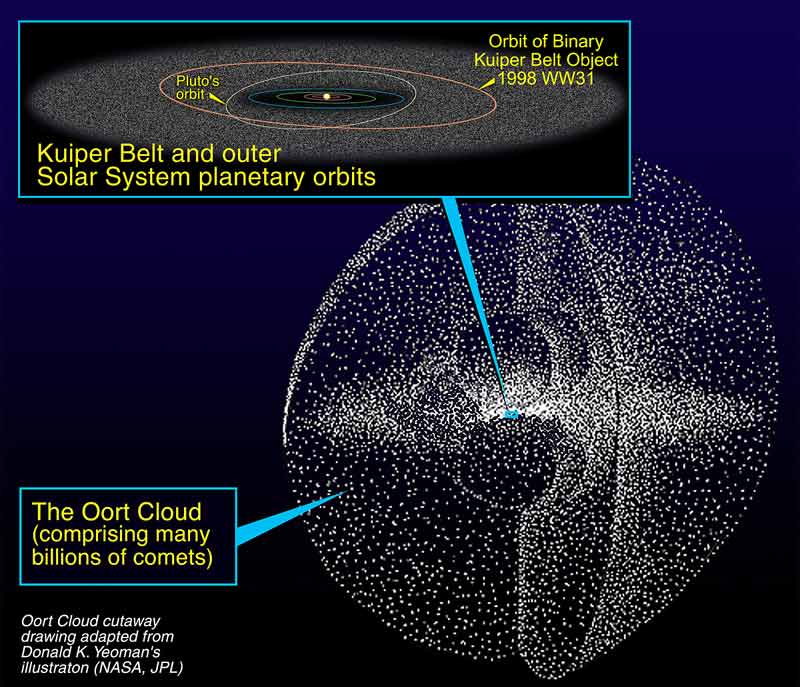
What would you use such a thruster for? Reisz believes his system (called a microwave electrothermal thruster, or MET) could be used to place satellites into particular orbits or even allow military satellites to evade tracking. This last application is particularly important when we consider the demonstrated ability of the Chinese to shoot down satellites. But Reisz doesn't just have his sights set on local applications--he proposes using the MET to power deep-space probes into the Oort cloud.

A couple of interesting notes about the MET:

  • The higher the speed of the plasma coming out, the lower the thrust, and vice versa. This is a function of specific impulse (also called ISP), which is essentially how much thrust you get for a given amount and flow of a particular propellant.
  • It is an improved, long-life EM thruster.
  • It has very high ISP.
  • It has throttle-able ISP and thrust, with the limitations noted in the first point.
  • Because of its variable settings, MET can be used for multiple applications.

I don't fully speak Geek, but I did ask what they would use to power this system. After all, in many aerospace systems, the engines themselves provide power for the overall vehicle after a small boost from some external source. In this case, the MET would use an external power source, anything from an RTG to nuclear fusion, to generate the microwaves it needs to ionize the propellant.

What's really interesting is how this small business grant has provided technology development for the private sector and educational opportunities for university students. That is something NASA used to do more often...here's hoping Obama gets some good advice and continues these types of programs.

Reisz closed by talking about the need for space technology development and how such development has enriched our lives. For instance, the world-changing adoption of integrated circuits by the Apollo program began the revolution in microelectronics and computers that we enjoy today. Reisz also mentioned the space program's discovery of hydrogen as a clean "wonder fuel," which is now getting greater attention as an alternative to petroleum. In short, investments in space are investments in our infrastructure. One hopes the president remembers that, too.

Thursday, January 22, 2009

Educational Resources and Engineering Education Goals

I've encountered some interesting things over the course of the last week or so. Rather than comment extensively, I'll just include the links below.

As a follow-up to my recent ScienceCheerleader blog, I thought this MIT presentation regarding engineering education goals was worth reading: http://raphael.mit.edu/MAO2006_deWeckWillcox.pdf

Also, if you would like to "get smart" on science, math, history, engineering, music, or darn near anything else and you don't have the money or time to go back to college, I recommend the following links:

Engineering handbooks from the Department of Energy: http://www.hss.energy.gov/NuclearSafety/ns/techstds/standard/standard.html

MIT Open Courseware: http://ocw.mit.edu/OcwWeb/web/home/home/index.htm. This one is really cool, because it includes lectures, course notes, and even exams!

The MIT site is akin to another favorite of mine, The Teaching Company: http://www.teach12.com/teach12.aspx

TTC offers courses in everything from music appreciation to history to science and math. No college credit, obviously, but college-level materials and lectures via "class on tape/CD/DVD."

Wednesday, November 26, 2008

Sorting Out Engineering Reality

A recurring problem I have in my line of work is judging what’s “true” and what’s not. It’s not so much that I think people are lying to me about what’s going on in the space business, it’s just that I was too lazy in junior high, high school, and college to get myself a serious education in science, technology, engineering, and mathematics (STEM). This is a problem for me and, I fear, for many more Americans, as more and more of our nation’s future choices will be STEM-based. This is part of the reason I’m such a fan of
Darlene the Science Cheerleader: she’s a strong advocate for science education among the non-scientific masses, and gosh knows we all need it.

Now mind you, the space business has, as one of my previous employers put it, “plenty of engineers; what we need is a writer.” So that’s been my role: technical writer. I translate Engineerish into English. I’m able to do this without understanding the work 100% because I understand how words work. They aren’t paying me to understand it all. I do my level best, of course, to educate myself so that I do understand it. And I understand enough about political philosophy and policy to be an advocate.

Sometimes, however, it’s difficult to know which technologies, among the many I’ve supported over the past 8 years, stands a solid chance of succeeding. That leaves me the option of taking things on faith or getting myself a better education. The following narrative, then, is a review of the hot technologies space advocates support, how they’re supposed/claimed to work, and what the objections to them are. I can explain them clearly, as you’ll see, but I can’t for the life of me sort out all this.

Space Solar Power (SSP) / Solar Power Satellites (SPS) / Space-Based Solar Power (SBSP)
How It’s Supposed to Work
A solar power satellite is a large array of solar cells—say, a mile across—placed in orbit. Because it is above the atmosphere and in the sunlight for longer periods of time, the theory is that the SPS would collect more solar energy than ground-based solar. The energy collected from these solar cells would then be transmitted, projected, or beamed down (pick your verb) to a rectifying antenna (
rectenna) on the ground. The power would then go out from the rectenna to a nearby electrical grid. The potential output of such a system would be in the 1-10 gigawatt range.

The Arguments Against It

  • It’s too expensive to get the hardware into orbit.
  • Even if you could bring down launch costs, the operating costs would still not make SSP commercially competitive with any ground-based energy source, including ground-based solar.
  • Even if you could get the hardware up there cheaply and get it to provide power competitively, any usefully scaled SPS is too big to fit on any known launcher (except, maybe, Ares V).
  • Even if you could get the hardware up there cheaply and on a properly sized rocket, it wouldn’t work for the following reasons:
    --Beam attenuation; i.e., the microwave or laser transmitting power to the ground rectenna would lose too much energy to be worthwhile.
    --The SPS would be so big and so lightweight that solar radiation pressure alone would cause it to keep drifting along its orbit. This is how one powers solar sails, which are meant to travel.
    --
    Even if you could get the hardware to work, it would never be accepted by the public because:
    o Environmental activists would go bonkers protesting it because it uses radiation as its primary output (even if that same radiation is also used to power ground-based solar cells).
    o Government environmental regulations would stifle the technology somehow, with or without encouragement from the environmental lobby.
    o “Someone could use it as a weapon.” (See the James Bond flick “
    Goldeneye” for a sample of what that might look like.)
    o It wouldn’t provide much more energy than ground-based solar power.

Fine. I would submit a bit of my own hardheaded criticism, if I may: All of these objections come before anyone has even tried to build, field, and test a single SPS. We should at least try the bloody thing before trashing it or dismissing it out of hand. The cynics and skeptics might be right, but I’d feel more confident of their verdict if they had hard data to back up their assertions.

Reusable Launch Vehicles (RLVs) / Single Stage To Orbit (SSTO) / Two Stage To Orbit (TSTO)
How It’s Supposed to Work
A Reusable Launch Vehicle (RLV) is just what it sounds like: a rocket for getting to space that you can fly more than once. An RLV is supposed to be completely reusable, operating like an aircraft. No stages are dropped into the ocean, the vehicle flies multiple times, and costs are thereby reduced through mass production and repeat flight cycles.
The Arguments Against It
NASA has spent a great deal of time and money trying to develop precursor technologies or actual RLVs for the last 20 years or so. The Space Shuttle system, designed in the early 1970s, is partially reusable. Its solid rocket boosters return to Earth by parachute and splash down into the ocean. The orbiter, which houses the crew and cargo, lifts off like a rocket, its fuel tank is discarded and dropped into the Indian Ocean, and the orbiter then completes its mission, reenters the Earth’s atmosphere, and comes in to land like a glider. The orbiter is then refurbished and refitted for another mission.

The failed or incomplete RLV or partial RLV programs include the
National AeroSpace Plane (NASP), Space Launch Initiative (SLI), Orbital Space Plane (OSP), DC-XA, X-33/VentureStar, and X-34. For want of budgetary support or technological feasibility or both, NASA has not been able to do it. Does that mean RLVs are impossible? No, but they are really damned difficult, and the work has been attempted by some very bright people, both inside and outside the world’s premier space agency. Jerry Pournelle is more optimistic on this score than I am. He believes that the problem with RLV/SSTO has not been the technology so much as the organizations running the programs. He believes if the old NACA “X program” model is followed, then technology development could happen—not immediately, and not with billions and billions of dollars spread around a number of big contractors and important states—but with single contractors, small budgets, shorter timeframes, and more humble goals. Unfortunately, I don’t think our government is up for small and humble anymore.

Space Elevators
How It’s Supposed to Work
A
space elevator (also called an “orbital tower” or “skyhook”) is a structure that stretches from a point on Earth all the way out to geosynchronous orbit. The centrifugal force of the Earth’s rotation counteracts the elevator’s tendency to fall, so the tower stands straight out from the planet like a giant radio tower. The structure becomes an “elevator” when you attach climber vehicles capable of transporting people or cargo up and down the tower’s surface—the most common imagined climber would be a maglev (magnetic levitation) train. The maglev climber would require only electrical power to move, and would not produce sonic booms or require explosive chemicals, as rockets do.
The Arguments Against It
The structural materials strong enough to build a self-supporting elevator were only theoretical until the late 20th century. Then companies began experimenting with artificial diamonds, carbon “whiskers,” and now carbon nanotubes. Unfortunately, no one has made enough carbon nanotubes (which are molecule-sized) to build load-bearing structures. At present, they’re simply too expensive to mass produce.

Another interesting argument I’ve heard is that the elevator would act as a massive short circuit for the entire planet’s ionosphere, which would essentially fry, melt, or disintegrate the tower. The argument here is that the large amount of charged particles in the Van Allen Belts would follow the elevator all the way down to the Earth, becoming the world’s largest lightning rod.

The last argument against the elevator comes from my own experience
observing the Space Elevator Games in Las Cruces in 2006. These Games are sponsored by NASA as a means of generating competition to create technologies that could lead to a space elevator. Rather than a typical wound cable (the original concept for the elevator), these experimental crawlers all had to make their way up a six-inch-wide, 60-meter (~197 feet) tall industrial belt suspended from a crane. We were in the desert, mind you, so winds tend to be a little fickle, but the best guess was that winds were gusting to 10-15 miles per hour. Even in that slight breeze, the belt was whipping about in the wind like a crazed sail or weather flag in a full gale. Several teams had difficulty just attaching their crawler to the belt, much less getting their vehicle to climb the twisting belt. My verdict: even at great tension, atmospheric effects on the Earthbound side of the elevator would prevent any vehicle from traversing the distance safely, to say nothing of what sorts of oscillations might develop when moving through orbital space.

Asteroid Mining
How It’s Supposed to Work
Planetary science professor John S. Lewis makes a pretty compelling
case for mining the metals of nickel-iron asteroids to fulfill resource needs here on Earth or for building settlements in space. These asteroids include massive amounts of iron (obviously), platinum-group metals (useful for fuel cells), water and ammonia “volatiles,” and the equivalent of natural stainless steel.
The Arguments Against It
We’ve landed a couple of robotic spacecraft on asteroids. They weren’t designed for that, but the gravity on asteroids is so small (measured in thousandths of a gravity) that they could just about turn off their thrusters and drop onto them without a jar. That microgravity will be a problem for humans working there, of course, as we’re
learning from the International Space Station.

Next, we have never developed the technical tools for mining, extracting, and refining materials in micro- or zero gravity. (An obvious answer, of course, is “why don’t we?”) However, most mining and refining processes done here on Earth require high heat and gravity effects to separate different components from each other.

Finally, returning to Lewis’s book, he made a point that if all of the useful metals and other materials were mined from a single Amon-class asteroid and sold on Earth at current market prices, their value would be $20 trillion. It’s a great theory that ignores economic reality. Let’s say we found an asteroid that really did make platinum as common as sand on Miami Beach. Even if the platinum were put to work building catalysts for a worldwide fleet of
fuel cells, the price of the commodity would drop to about what you’d expect to pay for a handful of sand in Miami Beach. The materials of the Asteroid Belt may be abundant, but they’ll have to make people rich in space because they sure as heck won’t be on Earth.

Space Tourism / Personal Spaceflight
How It’s Supposed to Work
Civilian excursions into suborbital space by Virgin Galactic, Blue Origin, etc., could generate enough demand and traffic to produce mass-produced rockets, experience in operating RLVs (see above), and capital for a functioning space economy in orbit.
The Arguments Against It
Space tourism has been “just around the corner” since 2004, and it looks like it’ll be another year or two before Virgin Galactic is able to fly paying customers aboard their Burt Rutan-built Spaceship Twos. A lot of operations have folded since the X Prize was won. Others are working in secret. Many things can go wrong, and the American public is not quite as willing to embrace risk as it was 40-50 years ago. One bad accident, and some believe that lawsuits will all but kill the “personal spaceflight” movement.

The more sarcastic individuals within NASA are quick to point out that SpaceShipOne did not make it to orbit, but “repeated something the X-15 was able to do 40 years ago, and Rutan did it using technology developed by NASA.” Aside from the sour-grapes and elitism in those comments, they are technically correct. Yet work on personal spaceflight continues because there still are people willing to shell out the big bucks ($250,000 for a flight on Virgin Galactic, if and when) to fulfill their dreams of space travel.

*

And these are just some of the issues to be addressed in the space business. I haven’t even touched on the Ares vs. EELV or DIRECT/Jupiter 120 debate (nor will I comment publicly on activities where I have a vested employment interest). I know a little more about the government vs. private sector debate, but feel that that’s an argument for another night. In any case, this evening I wanted to focus on technical issues because these are the bigger questions that I do not have enough basis in theory or practice to answer properly. Political questions are another matter.

So, seriously: if there are any technical folks out there who know a reasonably quick way to get smart on the big engineering questions floating around the space business today, I’d be happy to hear it. In the meantime, I can only help the ones who DO know the facts and theories behind their pet projects frame their arguments in better language. The rest, unfortunately, I have to take on faith.